The People Behind The Prize
The Safal Kiswahili Prize for African Literature is guided by dedicated founders, trustees, and distinguished judges who champion the growth of Kiswahili literature across Africa.
Director
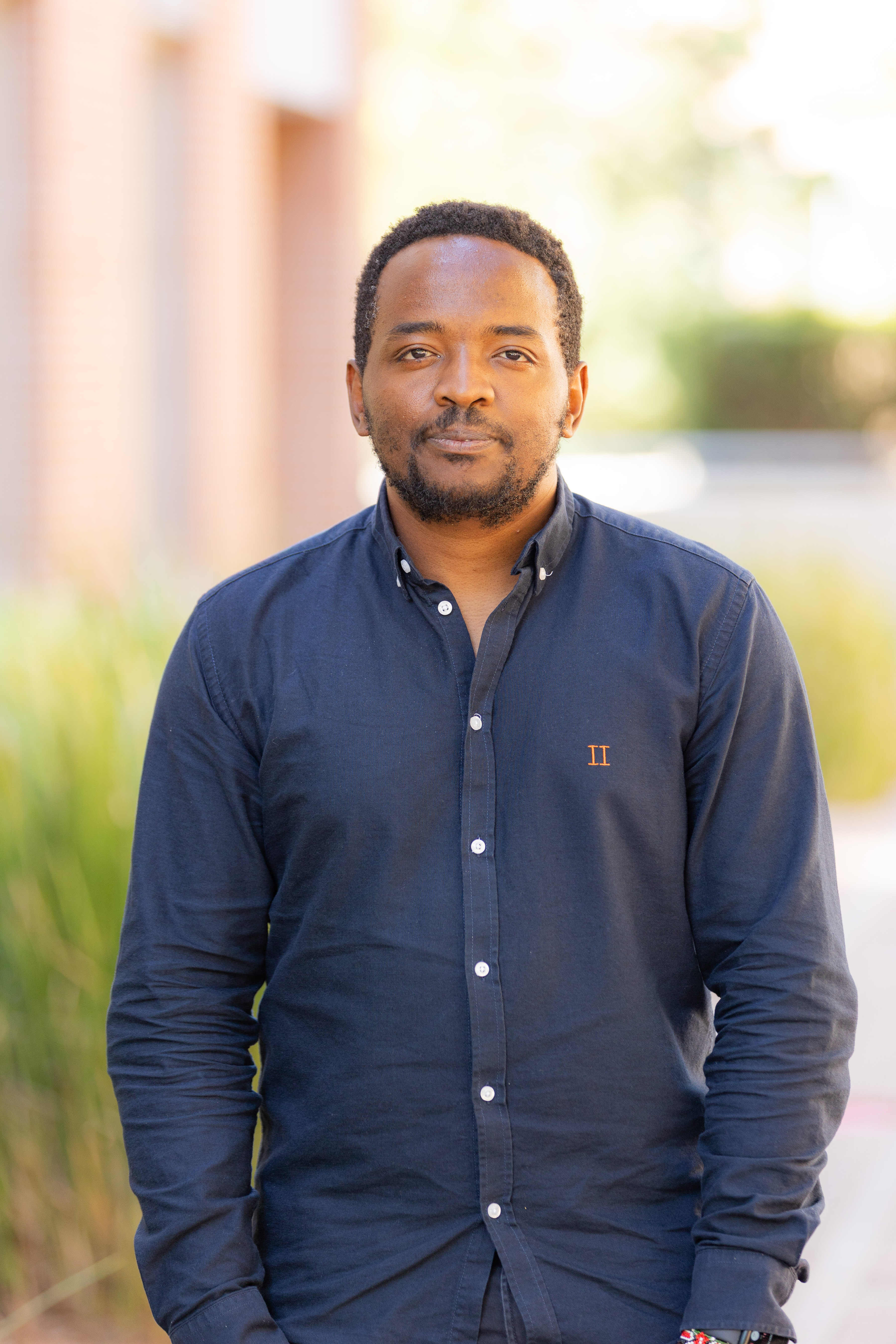 Director
Munyao Kilolo
Munyao Kilolo has worked with the Safal Kiswahili Prize since 2019, first as an administrator and then as Director, starting in 2022. During this time, he has received and cataloged submissions, confirmed that entries met the prize’s criteria, and supported the judging panel throughout their deliberations each year.
As part of the judging process, he shares the prize’s evaluation guidelines, which the panel uses to determine the longlist, shortlist, and eventual winners. He has served as the liaison to the Board of Trustees, whose meetings he convenes and whose official record he maintains. He also works closely with the team at ALAF and the SAFAL MRM Foundation to manage the logistics of award ceremonies that have alternated between Nairobi and Dar es Salaam over the years. Munyao is also Editor-in-Chief of the Ituĩka Literary Platform and has previously worked with Jalada Africa.
Board of Trustees
 Board Chairman
Abdilatif Abdalla
Abdilatif Abdalla is best known for his poetry volume Sauti ya Dhiki (Voice of Agony, published in 1973), written in prison in Kenya between 1969–1972. He had been imprisoned for authoring the critical pamphlet Kenya: Twendapi? (Kenya: Where Are We Going? 1968), condemning the dictatorial features of Jomo Kenyatta’s KANU rule.
Abdalla has also been involved in a multitude of translation and editing projects — between postcolonial novels (Ayi Kwei Armah), Qur’an translations, historic Swahili poetry, and critical academic works. He was a driving force in shaping a democratic opposition to the Moi regime from exile in London (with Ngugi et al.) through the 1980s and 1990s.
 Co-Founder & Trustee
Mukoma Wa Ngugi
Assistant Professor of English at Cornell University and co-founder of the Safal Kiswahili Prize. Author of Black Star Nairobi (Melville, 2013), Nairobi Heat (Penguin SA 2009, Melville House 2011), and the poetry anthology Hurling Words at Consciousness (AWP, 2006). He is a columnist for This is Africa.
Mukoma holds a PhD in English from the University of Wisconsin, Madison, an MA in Creative Writing from Boston University, and a BA in English and Political Science from Albright College. In 2013, New African magazine named him one of the 100 Most Influential Africans. The German translation of Nairobi Heat was named the 2014 Crime Book of the Season by Buchkultur. In 2009 he was shortlisted for the Caine Prize for African Writing, and in 2010 for the Penguin Prize for African Writing for his novel manuscript The First and Second Books of Transition. A new novel titled Mrs. Shaw is forthcoming from Ohio U/Swallow Press and Hunting Words with my Father (poems) from the Africa Poetry Fund.
 Trustee
Walter Bgoya
From 1972 to 1990, Walter Bgoya directed the Tanzania Publishing House (TPH), which promoted Dar es Salaam as a progressive centre for intellectuals internationally. TPH publications included Walter Rodney’s How Europe Underdeveloped Africa, Agostinho Neto’s Sacred Hope, and Issa Shivji’s Class Struggle in Tanzania.
In 1991, Bgoya founded Mkuki na Nyota, an independent book publishing company based in Dar es Salaam. “We are proud to publish relevant, beautiful, and affordable books, and place them in the hands of passionate readers in Tanzania and around the world.” Mkuki na Nyota publishes children’s books, trade books, and educational books in both English and Kiswahili, and actively translates literature into Kiswahili, including The Little Prince from the original French. Bgoya is a founding member of the African Books Collective, the African Publishers Network, and was the Chairperson of the jury for the prestigious NOMA Award for Publishing in Africa. He has delivered numerous papers on reading, writing, publishing, and the quest for an authentic African voice in the literary world.
 Trustee
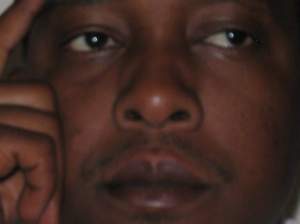
Chege Githiora
Senior Lecturer in Swahili in the Department of the Languages and Cultures of Africa at SOAS, University of London. Born and raised in Kenya, he studied in Mexico and the USA, and taught Swahili at El Colegio de Mexico, Boston University, and Michigan State University.
Chege graduated with a PhD in Linguistics from Michigan State University in 1999. He writes and translates from and into Gĩkũyũ, English, Swahili, and Spanish. His research interests include multilingualism, variation in language, urban youth codes, Spanish language and Afro-Latin American culture, lexicography, and translation. He also teaches and researches on the structure of Bantu languages with focus on Gĩkũyũ and Kiswahili.
 Trustee
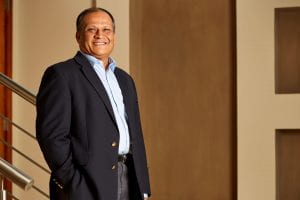
Sarit Shah
Born and schooled in Kenya, qualified in the UK and USA, Sarit is a British citizen residing permanently in South Africa to manage the Safal Group’s widely spread business interests across Eastern and Southern Africa, and India.
After graduating with a BSc (Hons) in Electrical and Electronic Engineering from Manchester University in 1988, Sarit gained work experience in the UK before embarking on a full-time MBA through the University of Rochester, New York. On completion in 1991, he moved to Uganda to start a business importing building products, which ultimately led to his relocation to South Africa in 1996 and the commencement of his journey at the Safal Group in various leadership roles. The Safal Group is a market leader in the Roofing & Steel Industry in most countries in Eastern and Southern Africa.
 Trustee
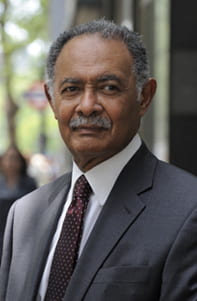
Dr. Farouk Topan
A prominent Swahili scholar and writer who pioneered the study and teaching of Swahili literature in Kiswahili at the University of Dar es Salaam and the University of Nairobi. He has published widely on various aspects of Swahili literature, religion, spirit possession, and identity in East Africa.
Dr. Topan taught at SOAS and was one of the founder editors of the departmental Journal of African Cultural Studies (JACS). He has also been teaching at the Aga Khan University Institute for the Study of Muslim Civilizations.
 Trustee
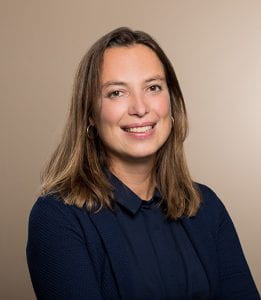
Clarissa Vierke
Professor of Literatures in African Languages at the University of Bayreuth. She has been organizing the annual Bayreuth Swahili Colloquium for over twenty years and her research focuses on old, pre-colonial Swahili poetry preserved in Arabic script.
In recent years, she has concentrated on manuscripts which have travelled widely along the East African Coast — found in Kenya, Tanzania, and Mozambique. Together with colleagues from Francophone and comparative literature, she has a research project on the networks of literature and arts linking various countries and parts of the Indian Ocean. Clarissa is principal investigator of the Cluster of Excellence “Africa Multiple: Reconfiguring African Studies” and spokesperson of the research section Arts and Aesthetics. She also co-founded the project “Recalibrating Afrikanistik” funded by the Volkswagen Foundation, with colleagues from Leipzig, Cologne, Stellenbosch, Wukari, and Eldoret.
 Co-Founder & Trustee
Lizzy Attree
Dr. Lizzy Attree co-founded the Safal Kiswahili Prize for African Literature alongside Mukoma Wa Ngugi in 2014 with a shared vision of recognizing and celebrating the richness of Kiswahili literature and promoting writing in African languages.
Other Board Members
“Ni jambo la kufurahisha mno kuona kwamba tangu mashindano yalipoanzishwa mwaka 2015, bado Tuzo hii inaendelea kuwavutia washiriki kutoka nchi mbalimbali na kwa idadi kubwa. Pia kiwango cha ubora wa miswada inayoshindanishwa kila mwaka, na kwa hivyo kuitajirisha Fasihi ya Kiswahili.”